Own a rental property or holiday home? The ATO's updated guidance could affect what you can and can't claim.
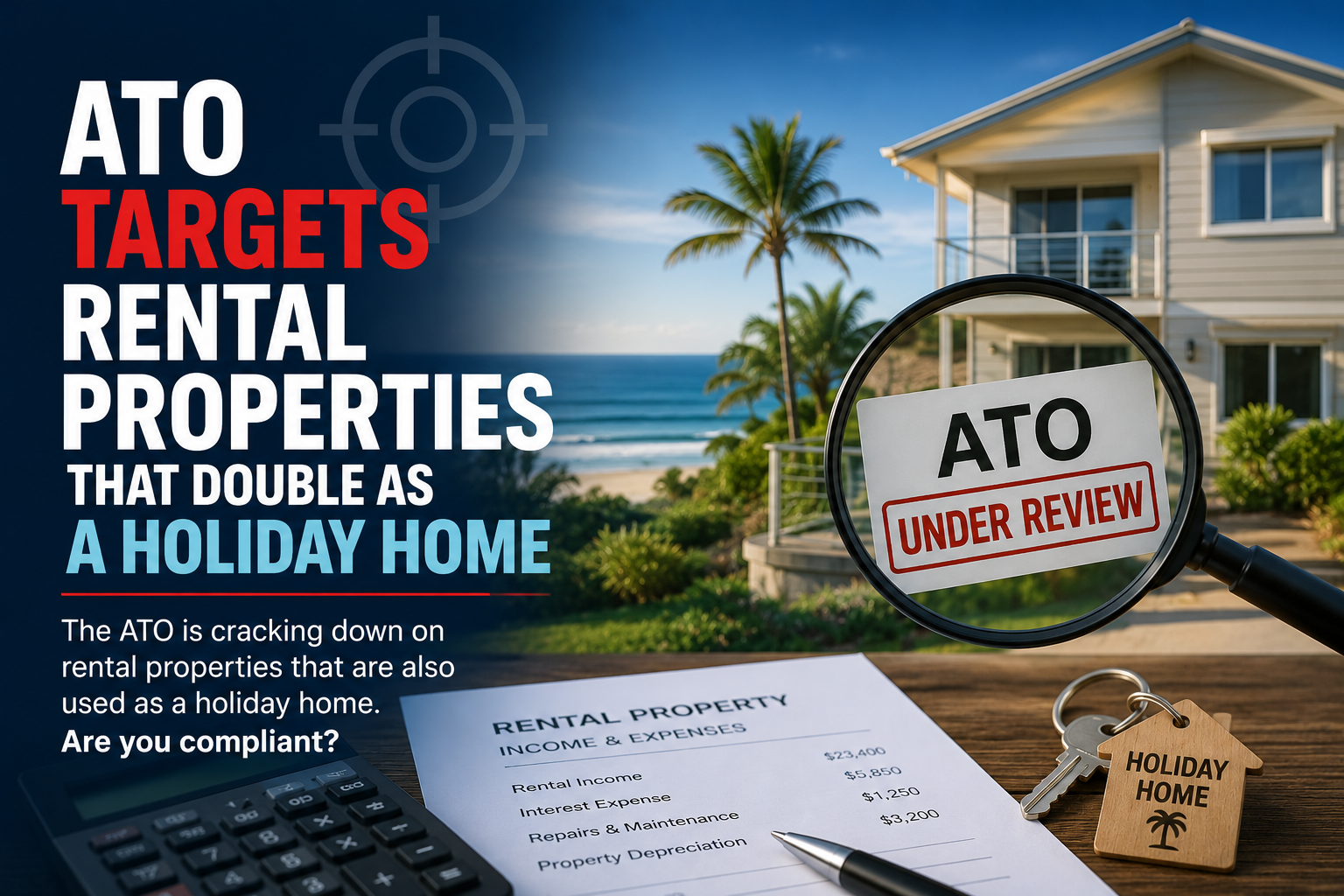
If you own a rental property — particularly one that doubles as a holiday home — the ATO's recently updated guidance is worth paying close attention to. The ATO has clarified how it assesses rental income and expenses to reflect the growing variety of ways investors rent out their properties, and the rules aren't always straightforward.
The key question: what is the property primarily used for?
The ATO's position comes down to one central question — is the property genuinely being used to produce income, or is it primarily a private asset that occasionally gets rented out?
If the answer is the latter, the tax implications are significant. Where a holiday home is not used mainly to earn assessable income, the ATO will deny most deductions. That means no claims for interest expenses, council rates, water rates, body corporate fees, depreciation, or capital works. The only deductions available in this scenario are direct costs tied to a specific rental — things like advertising, cleaning after a guest stay, and booking platform fees or commissions.
What if the property is genuinely income-producing?
If your holiday home is primarily rented out to generate income, you're on stronger ground — but the rules still require care. If there's a small amount of private use mixed in (for example, a week in the off-season when there were no bookings, or a few weekends when a booking was unlikely), you may still be able to claim deductions. However, expenses must be apportioned, and no deduction is available for any period of private use.
Why this matters now
The ATO's updated guidance signals increased focus on this area. With more Australians listing properties on short-term rental platforms, the line between investment property and personal holiday home has blurred — and the ATO is watching.
If you own a rental property or holiday home and want to make sure you're claiming correctly and staying on the right side of the ATO, get in touch with the RGA team. We can review your situation and make sure your deductions are defensible.
Need Help with your Business, Bookkeeping, Tax or SMSF requirements?
If you would like a little help, please get in touch with us for assistance. We can help with your business, bookkeeping, tax and SMSF requirements. To book an appointment, use our online booking system, give us a call on 07 3289 1700, or email us at reception@rgaaccounting.com.au.We look forward to assisting you this tax season!
Please also note that many of the comments in this publication are general in nature and anyone intending to apply the information to practical circumstances should seek professional advice to independently verify their interpretation and the information’s applicability to their particular circumstances. Should you have any further questions, please get in touch with us for assistance with your SMSF, business, bookkeeping and tax requirements. All rights reserved. Brought to you by RGA Business and Tax Accountants. Liability Limited by a scheme approved under Professional Standards Legislation.